テキスタイルを収集する際に考慮すべき点
テキスタイル作品は触覚的な存在感と多様なアプローチを提供します。その特性や要求を理解することで、空間や好みに合うかどうかを判断する助けとなります。
Textile art brings physical texture and a distinct presence to a collection, standing apart from painting and drawing. Its materials—fabric, thread, and sometimes mixed media—invite close inspection and touch, and often interact differently with light and space. For a buyer considering textile, the decision rests on how these qualities fit with your expectations, your room, and your sense of what you want to live with.
Textile works range from wall installations to woven carpets and embroidered panels. They can be abstract or figurative, dense or sparse, and their handling of surface and motif often differs from painted works. To decide if textile is right for you, it helps to look closely at specific examples and consider practical aspects such as scale, hanging, and lighting.
Understanding textile surfaces and materials
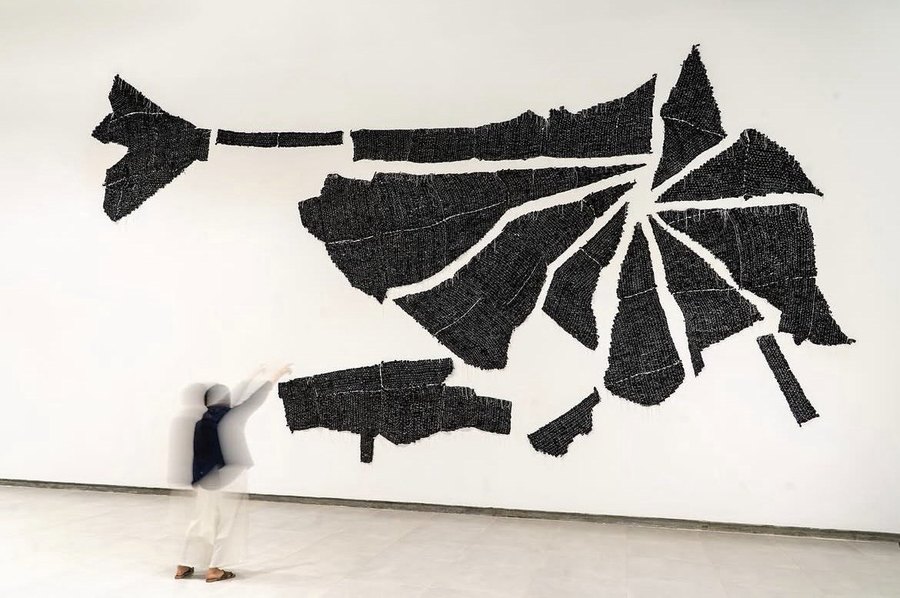
The surface of a textile work is rarely uniform. In Aerial by Shoaib Gorgani, irregular black fragments of textile are arranged on a white wall in a pattern that feels both deliberate and fragmented. The piece is large—600 cm by 1200 cm—and its collaged, textured surface is part of its visual impact. The monochrome palette heightens the contrast between the textile and the wall, and the flattened space offers clarity from a distance, but the texture rewards close viewing. Hanging such a work demands a wall with enough room not only for its size but for viewers to step back and approach. Even lighting helps emphasise the tactile quality without casting distracting shadows.
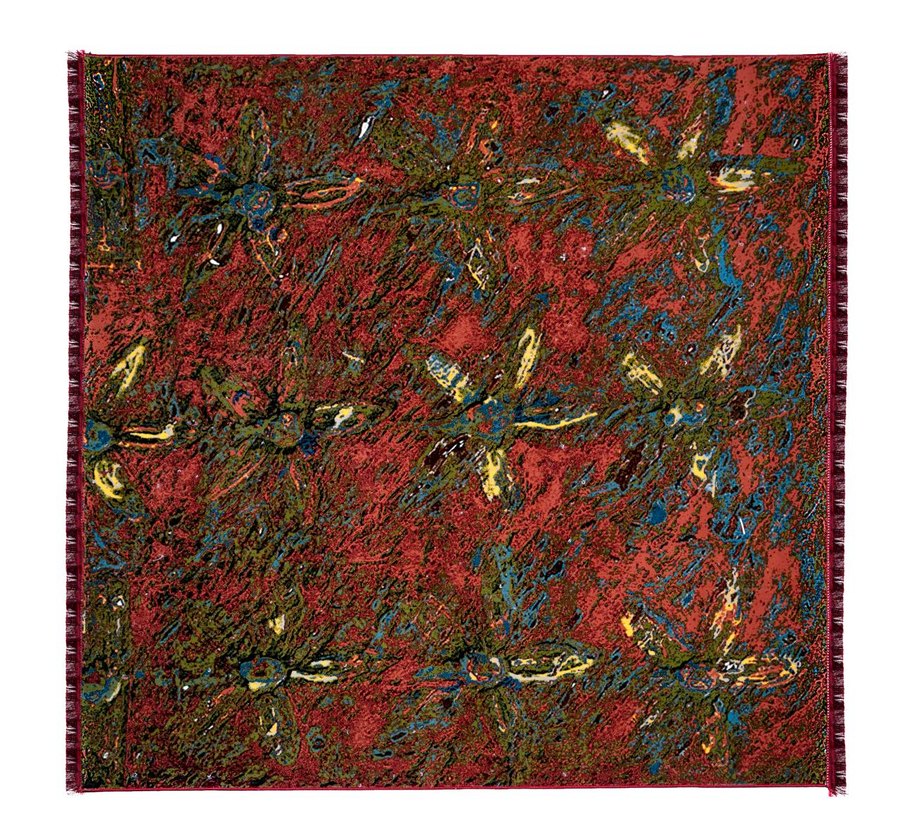
By contrast, Salimi by Homayoun Salimi is a machine-woven carpet with a square format (200 cm by 200 cm). Its surface is flat yet textured, with organic, botanical motifs repeated across the field. The palette is earthy and saturated, giving the work warmth and a sense of depth despite its flattened space. The all-over composition means there is no single focal point; the pattern is layered and continuous. This type of textile can be hung on a wall or placed on the floor, but wall-hanging preserves its visual qualities and avoids wear. The scale suits a medium to large room; measure your wall to ensure at least 20 cm clearance on each side for visual balance.
Textile techniques and motif
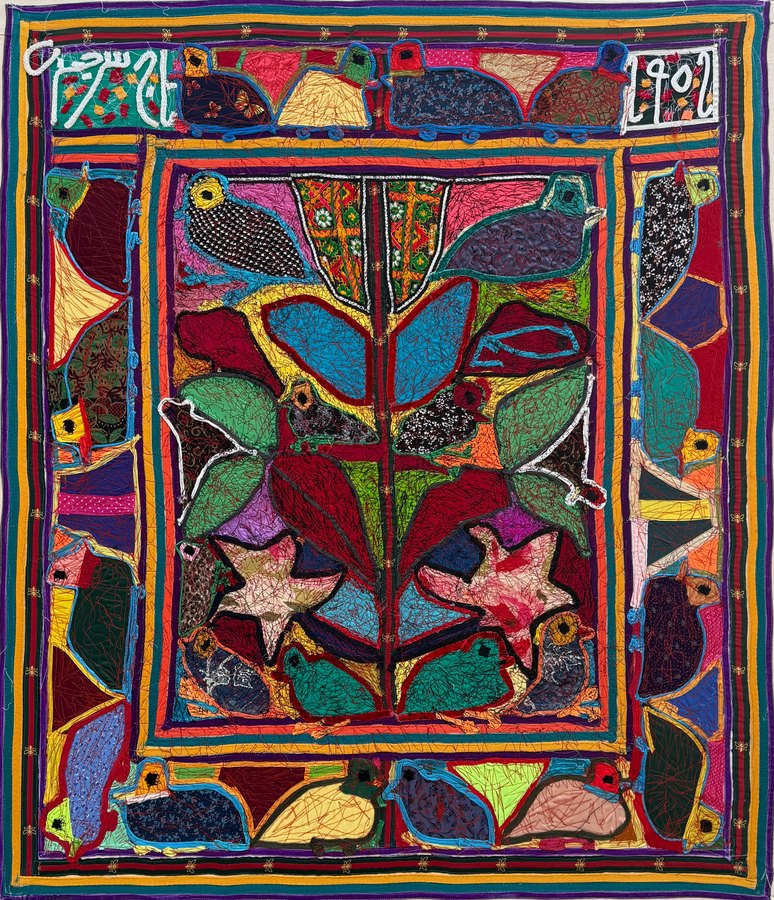
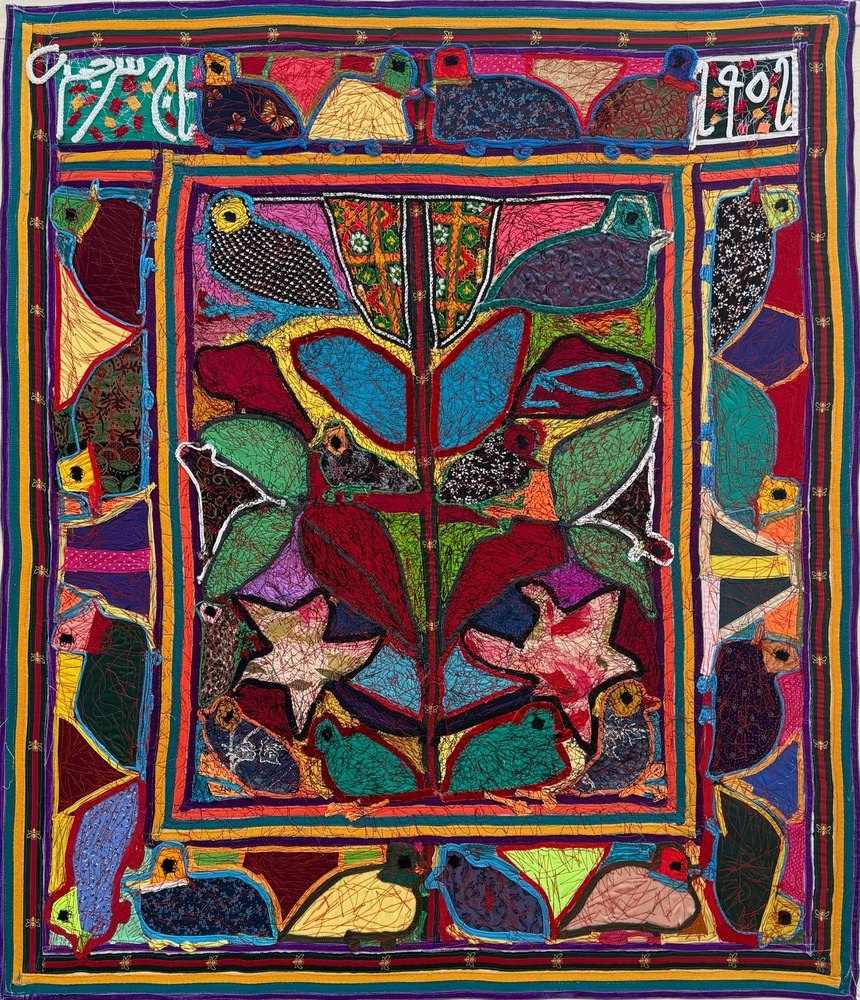
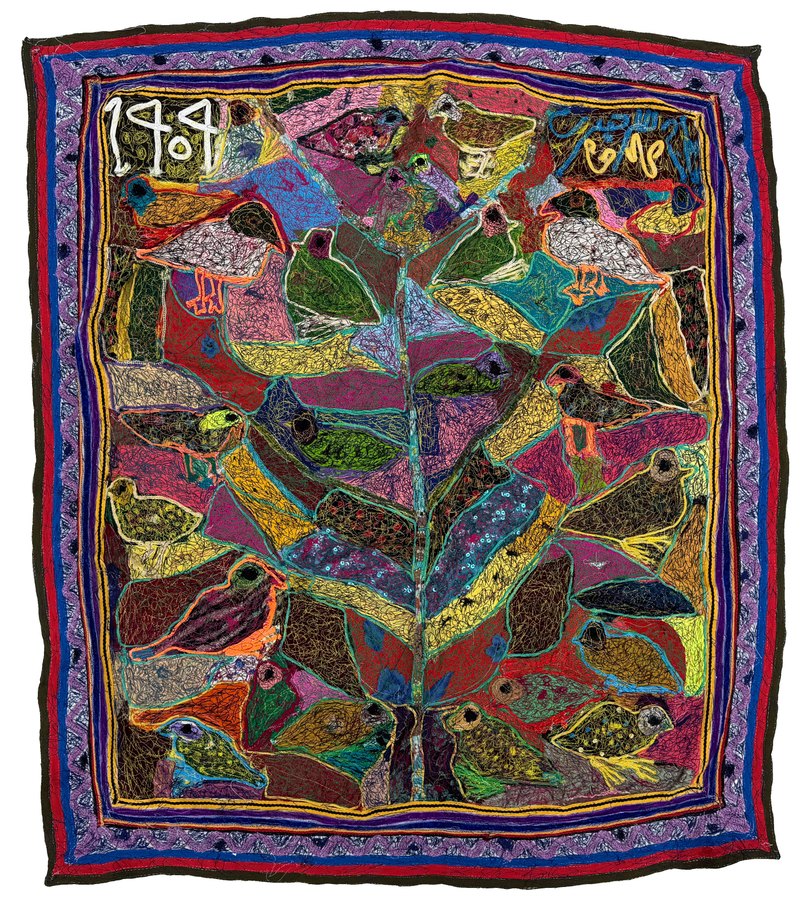
Textile art employs a range of techniques. Untitled by Taj Sar Jafari uses embroidery and appliqué on fabric, depicting birds on a tree with border patterns. The composition is centred and dense, with saturated colours and high contrast. The worked surface is tactile and layered, and the motifs are stylised rather than strictly realistic. This piece (98 cm by 85 cm) is suitable for a wall where the viewer can approach closely to appreciate the detail. Embroidered works benefit from even lighting to avoid glare and highlight the texture.
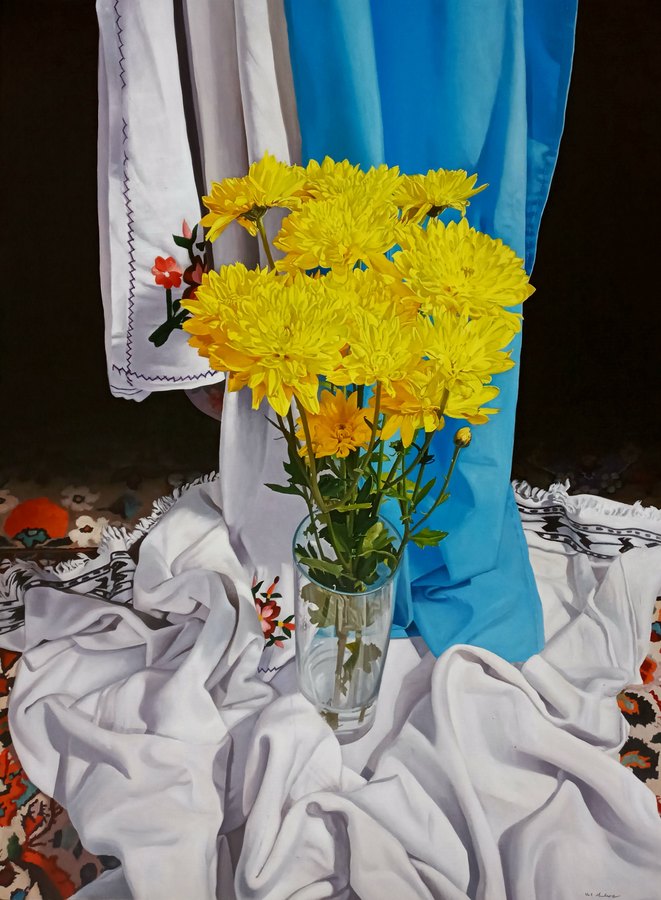
Paintings can also incorporate textile motifs. Untitled by Nasrin Bojd is an acrylic on canvas still life (185 cm by 135 cm) showing yellow flowers in a glass vase, draped fabrics, and patterned textile. The composition is centred and the palette saturated and natural. The flat surface contrasts with the implied texture of the fabrics depicted. Here, textile is present as motif rather than material, offering a different kind of engagement. The painting’s scale makes it suitable for a feature wall, and its colours can be matched or contrasted with wall paint and furniture.
Viewing and placement
Textile works respond to light and proximity. Textured surfaces, as in Aerial and Untitled, reward close viewing, while larger, flatter works like Salimi can be appreciated from a distance. Consider the height at which you hang a work: the centre should be at eye level, but larger pieces may require adjustment. Neutral wall colours allow textile palettes to stand out, while strong colours can either complement or compete.
Framing is less common with textile art, but some pieces benefit from a simple border or mounting to protect edges and support hanging. For heavier works, ensure your wall can bear the weight. Measure your space carefully; mark the corners with tape to visualise placement before committing.
Comparing textile with painting
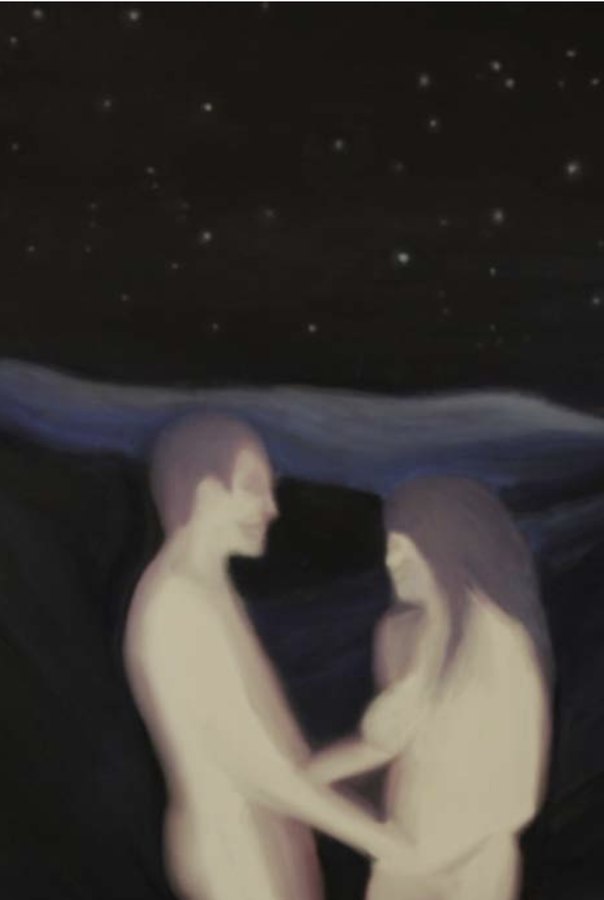
Looking at Solitaries by Elaheh Ramezani, an oil painting on paper (100 cm by 70 cm), the surface is flat with thin washes, and the subject—two nude figures under a starry sky—is figurative and intimate. The palette is muted and high-contrast, and the space ambiguous. Paintings like this offer a different relationship with light and texture; their surfaces are less tactile, and their motifs and handling may be more direct or subtle compared to textile works.
The other works in this piece
Choosing the work
Deciding if textile is for you involves considering your space, your taste for surface and motif, and your willingness to engage with the physical qualities of the materials. Take time to look closely, measure your wall, and imagine how the work will interact with your room and your daily life. Each piece offers its own demands and rewards.